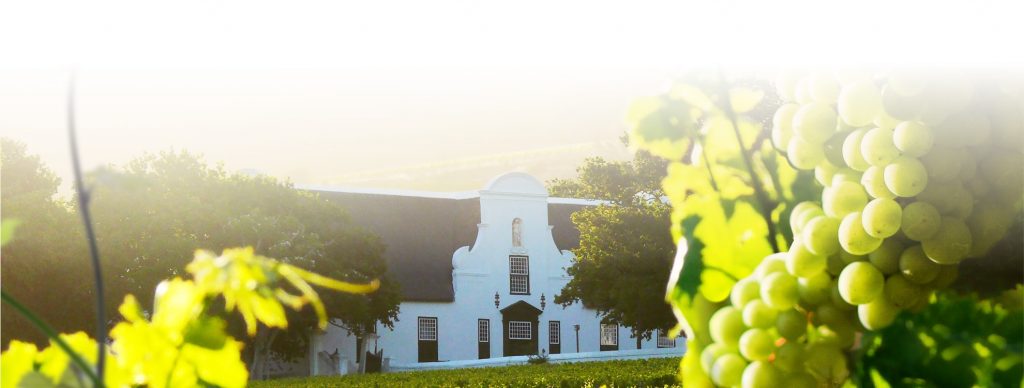
It takes years to build a Legacy. Even Decades. Or sometimes Centuries. Groot Constantia wine farm is testimony of how one man’s love for wine established South Africa’s first wine farm in 1685. In a word, our wines are from rich African soil, crafted to perfection. Groot Constantia memories are part of literature and heritage and embodies the timeless endeavour to perfection. Furthermore, our heritage stands for growth, life and beauty. Equally important, it is alive and vibrant, like the vineyards we hold dear. It is in our hearts. It’s our Legacy.
It takes years to build a Legacy. Even Decades. Or sometimes Centuries.
Groot Constantia’s is testimony of how one man’s love for wine established South Africa’s first wine farm in 1685. Our wines are from rich African soil, crafted to perfection. Groot Constantia memories are part of literature and heritage and embodies the timeless endeavour to perfection. Our heritage stands for growth, life and beauty. It is alive and vibrant, like the vineyards we hold dear. It is in our hearts.
“As part of our hop on hop off bus ticket we got to experience a cellar tour and wine tasting. The tour was informative and wine tasting had two choices of venue. We opted for the quieter venue across the courtyard. What a treat!” YAMASINGAPORE 1/09/2020
We use cookies on our website to give you the most relevant experience by remembering your preferences and repeat visits. By clicking “Accept”, you consent to the use of ALL the cookies.
This website uses cookies to improve your experience while you navigate through the website. Out of these, the cookies that are categorized as necessary are stored on your browser as they are essential for the working of basic functionalities of the website. We also use third-party cookies that help us analyze and understand how you use this website. These cookies will be stored in your browser only with your consent. You also have the option to opt-out of these cookies. But opting out of some of these cookies may affect your browsing experience.
Necessary cookies are absolutely essential for the website to function properly. These cookies ensure basic functionalities and security features of the website, anonymously.
Cookie
Duration
Description
cookielawinfo-checkbox-analytics
11 months
This cookie is set by GDPR Cookie Consent plugin. The cookie is used to store the user consent for the cookies in the category "Analytics".
cookielawinfo-checkbox-functional
11 months
The cookie is set by GDPR cookie consent to record the user consent for the cookies in the category "Functional".
cookielawinfo-checkbox-necessary
11 months
This cookie is set by GDPR Cookie Consent plugin. The cookies is used to store the user consent for the cookies in the category "Necessary".
cookielawinfo-checkbox-others
11 months
This cookie is set by GDPR Cookie Consent plugin. The cookie is used to store the user consent for the cookies in the category "Other.
cookielawinfo-checkbox-performance
11 months
This cookie is set by GDPR Cookie Consent plugin. The cookie is used to store the user consent for the cookies in the category "Performance".
viewed_cookie_policy
11 months
The cookie is set by the GDPR Cookie Consent plugin and is used to store whether or not user has consented to the use of cookies. It does not store any personal data.
Functional cookies help to perform certain functionalities like sharing the content of the website on social media platforms, collect feedbacks, and other third-party features.
Performance cookies are used to understand and analyze the key performance indexes of the website which helps in delivering a better user experience for the visitors.
Analytical cookies are used to understand how visitors interact with the website. These cookies help provide information on metrics the number of visitors, bounce rate, traffic source, etc.
Advertisement cookies are used to provide visitors with relevant ads and marketing campaigns. These cookies track visitors across websites and collect information to provide customized ads.
Kindly note that to receive your Groot Constantia wines before Christmas, all orders must be placed by 14 December 2025. Shipping will continue after this date; however, delivery before Christmas cannot be guaranteed.
Please also note that lead times over the festive period will be 7–10 working days.
Warm regards,
The Groot Constantia Team
Kindly be advised that all picnic baskets must be reserved at least 24 hours in advance from either Jonkershuis or Simons Restaurant. Additionally, guests are not permitted to bring their own picnic baskets or food onto the estate.